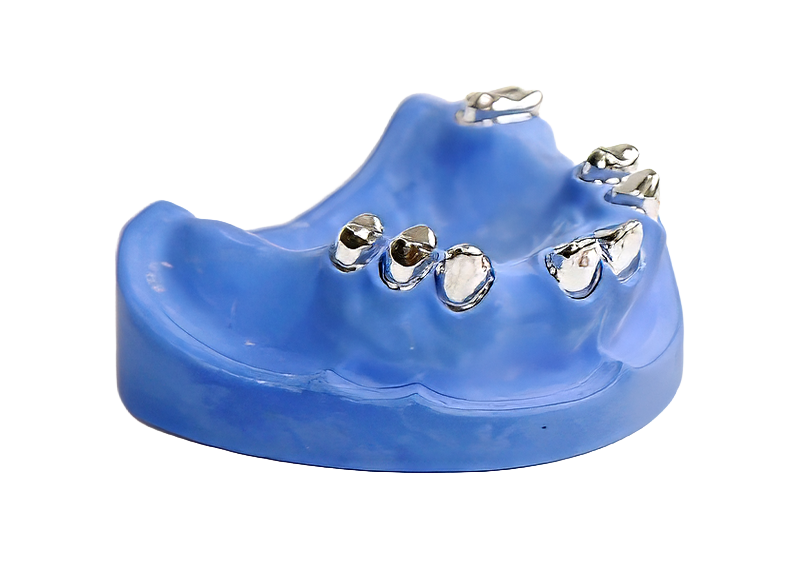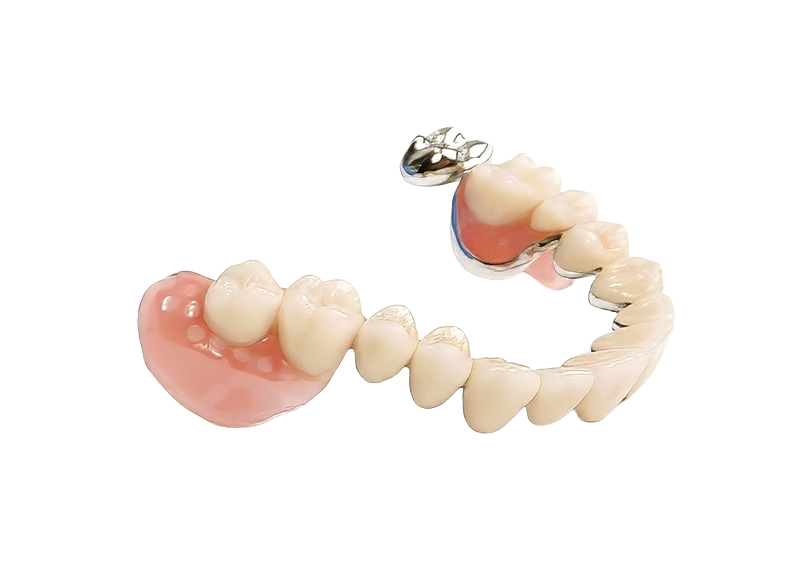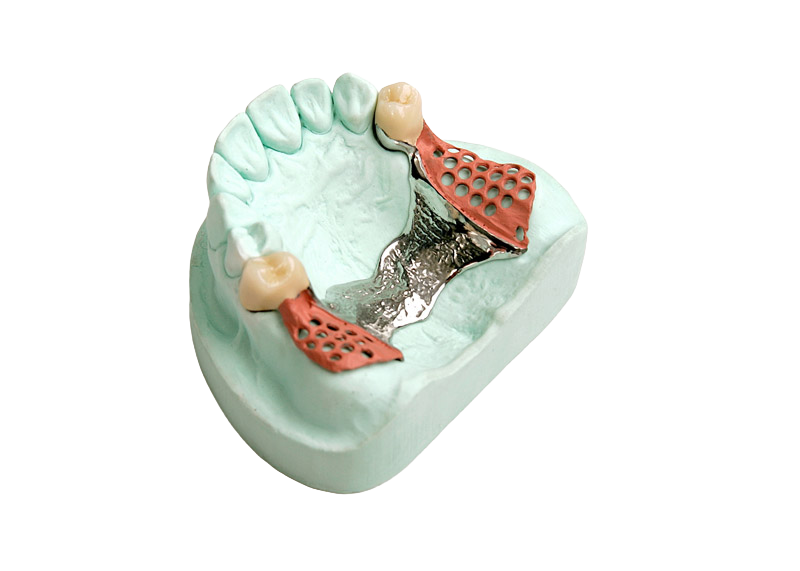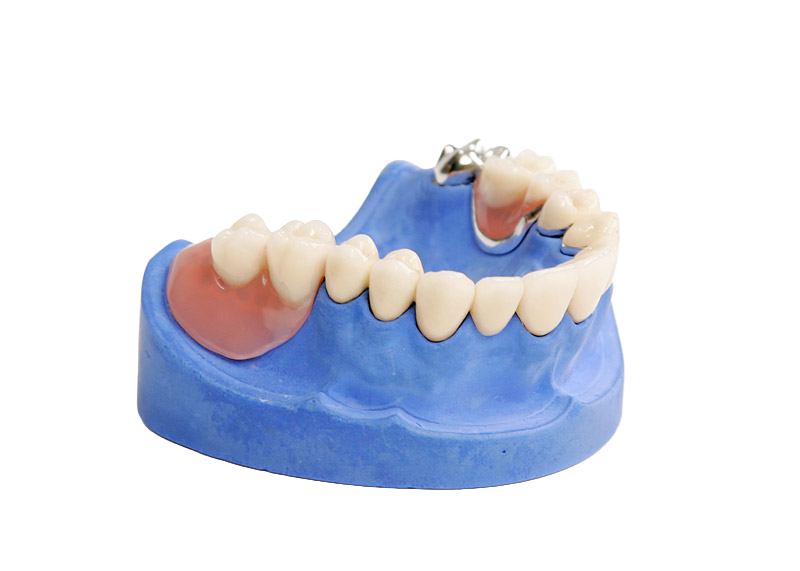
TEK-1 – the brand one-piece casting in the SILADENT-System
Informations for
for Dental labs
Seeing is good, doing it yourself is better. In our one-day TEK-1 intensive course, you will create your own TEK-1 piece under expert guidance.
Our course participants are always surprised:
It really is quick. And – once you know how – TEK-1 technology is easy to learn. After just this one day, you’ll be able to put the TEK-1 technique into practice straight away.
What will you learn on this TEK-1 day?
On the day, each participant will work together to produce one of the course models we provide.
(OK with transverse band and 2 telescopes => physically one of the most challenging).
Afterwards, you’ll be up to speed, and after 3–5 pieces, you’ll be fully proficient. Because you’ll try out every step yourself in detail.
You’ll also receive valuable practical tips. For example, how best to polish the inner surfaces of the secondary parts to a high gloss.
Course content:
- Duplicating the course models
- Fabricating the investment models
- Modelling the secondary structure
- Around midday, we cast the dies
- Fitting the telescopes in under 5 minutes
- Working with the Telemaster
- Finishing the work
- High-gloss polishing of the inner surfaces of the secondary parts whilst maintaining friction
This TEK-1 practical training is supplemented by additional specialist information whilst you work on the model. One of the best ways to combine theory and practice.
for Dentists
As a dentist, you speak with your patients every day. When it comes to dental prostheses, patients want to know exactly what they are getting and how much it will ultimately cost them. You can save money either on the service or on the materials. If you cut corners on the latter, you often have to accept compromises and compromises. Not so with TEK-1. These are not ordinary non-precious metal telescopic crowns. They are non-precious metal telescopic crowns that are comparable to gold telescopic crowns in terms of performance. Following the huge rise in the price of gold, many laboratories switched to non-precious metal telescopic crowns and manufactured them in exactly the same way as their gold counterparts. The results were unsatisfactory for both dental technicians and dentists.
Since 1994, Rainer Ehrich has been working on the smooth operation of NEM telescopes, and from 1996 onwards he was able to sell his first pieces of work from his own dental laboratory with a clear conscience. The TEK-1 technique has been continuously improved, particularly over the last five years.
The second major advantage of the TEK-1 technique is that the secondary parts and the cast framework are cast in a single piece. This means there is no need whatsoever for thick connecting arms, solder, adhesive or lasers. TEK-1 is the only brand-name one-piece casting worldwide and it is the most delicate yet simultaneously the most stable form of telescopic work. 15,000 dentists now work regularly with this technique and can either ease the financial burden on their patients or offer more comprehensive services, thereby selling higher-quality and more aesthetically pleasing restorations. In the field of telescopic restorations in particular, dimensions are a real issue. The electroforming technique, in particular, has declined by 70% due to the enormous amount of space it requires! Added to this, with the latter technique, there are the increasing galvanic elements that can arise in the mouth due to the significant metallurgical potential difference.
TEK-1, on the other hand, consists exclusively of a single alloy and is the most biocompatible type of telescopic work. And the most cost-effective too, as it eliminates the need for any precious metal alloys. It is completely precious metal-free. Some laboratories use reduced alloys, which are often resorted to due to the high price of gold. These so-called ‘economy’ alloys are not entirely without problems, as they can lead to an increased risk of corrosion and fracture. Play it safe when it comes to biocompatibility and stability and switch to TEK-1 for your telescopic work.
for Patients
What is the TEK-1 prosthesis?
- It is manufactured using a one-piece casting process with no adhesive or soldered joints.
- It is made from a non-precious metal alloy (NPM).
- It is the most delicate design of all telescopic restorations.
- It is extremely biocompatible, as it consists of a single alloy.
- It offers a very cost-effective alternative to conventional techniques.
- It is lightweight yet very sturdy.
- It performs as well as gold and is as affordable as non-precious metal.
Your benefits:
- Less denture material in the mouth
- The restoration lasts a very long time without becoming too loose
- Sturdy design despite its delicate construction
- No soldered or bonded joints
- Can also be used in combination with implants
- Can also be fabricated on zirconia abutments
- Hypoallergenic!
- Made in Germany – from the finest German raw materials